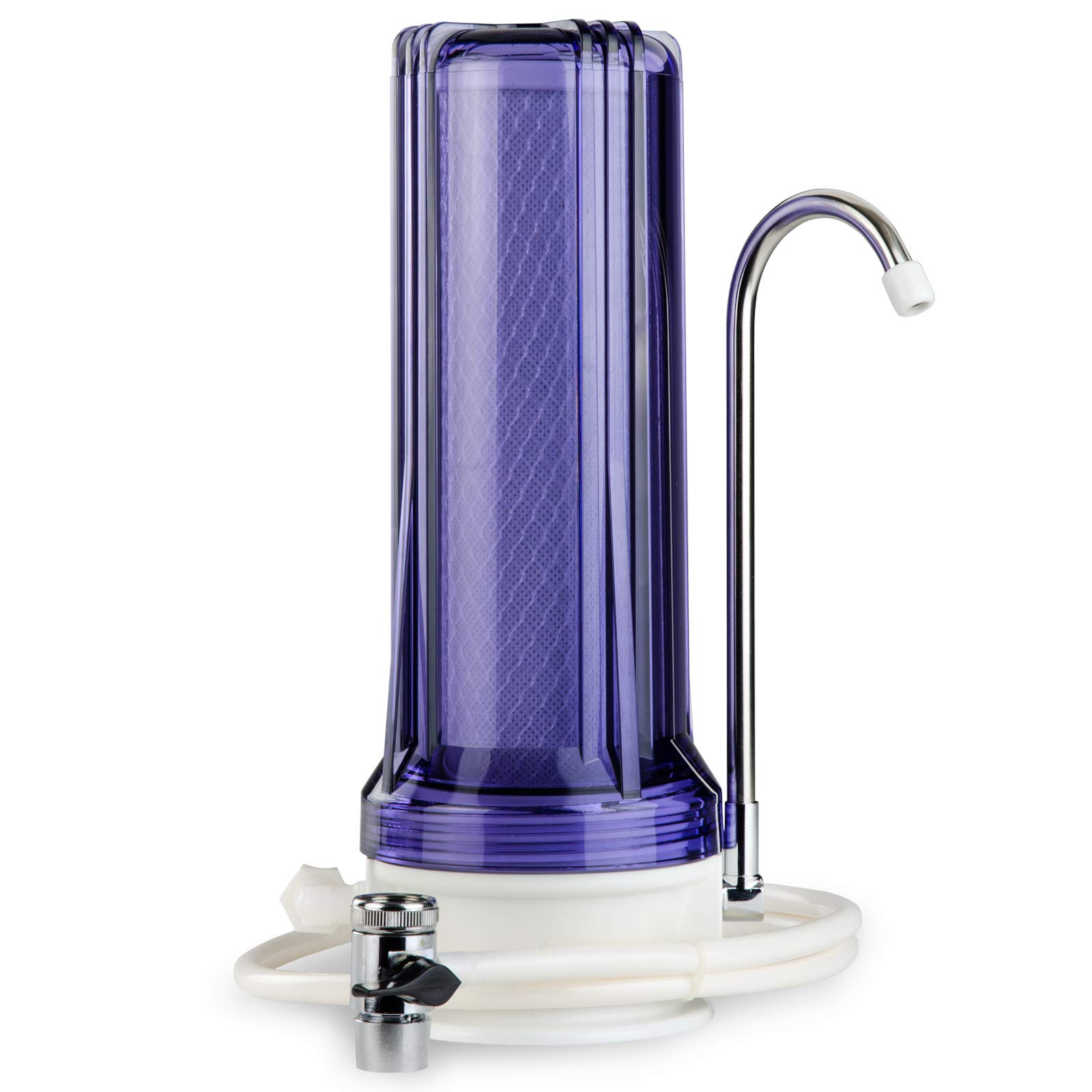
iSpring CKC1C
The countertop filter that connects straight to your faucet: filtered water in minutes, with no installation and no drilling. The most recommended filter to start with: No. 1 in our 2026 comparison.
- Connects to the faucet in minutes, with no permanent installation: ideal if you rent
- Reduces 95% of chlorine, under the NSF/ANSI standard
- A 6 to 12 month cartridge: with one cartridge a year, its running cost is among the lowest in its category
~$35-40 on Amazon
Filters by type of use
Not all filters go in the same place or solve the same problem. Find yours based on where you need it: each type has its own guide with the systems we cover and the replacement section for each one.
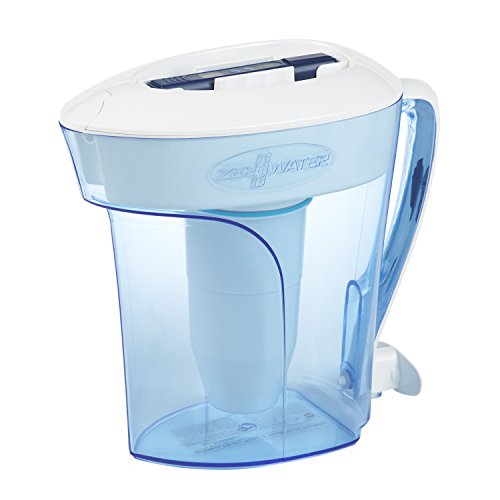
Pitcher
No installation: fill it up and into the fridge. The simplest way to start filtering the water you drink.
See pitchers →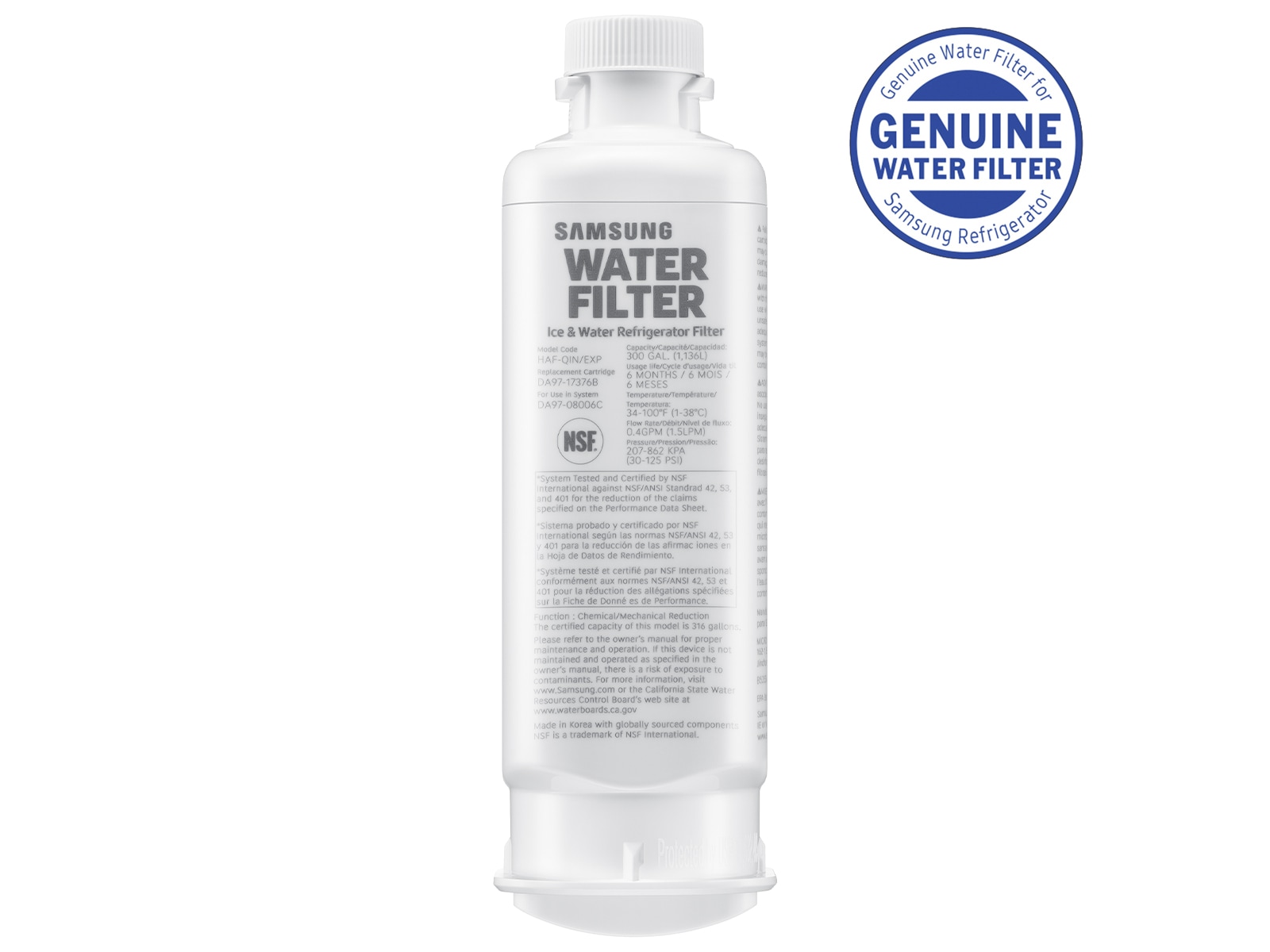
Refrigerator
The cartridge for your fridge with a dispenser: how to get the right replacement for your model and when to change it.
See refrigerator →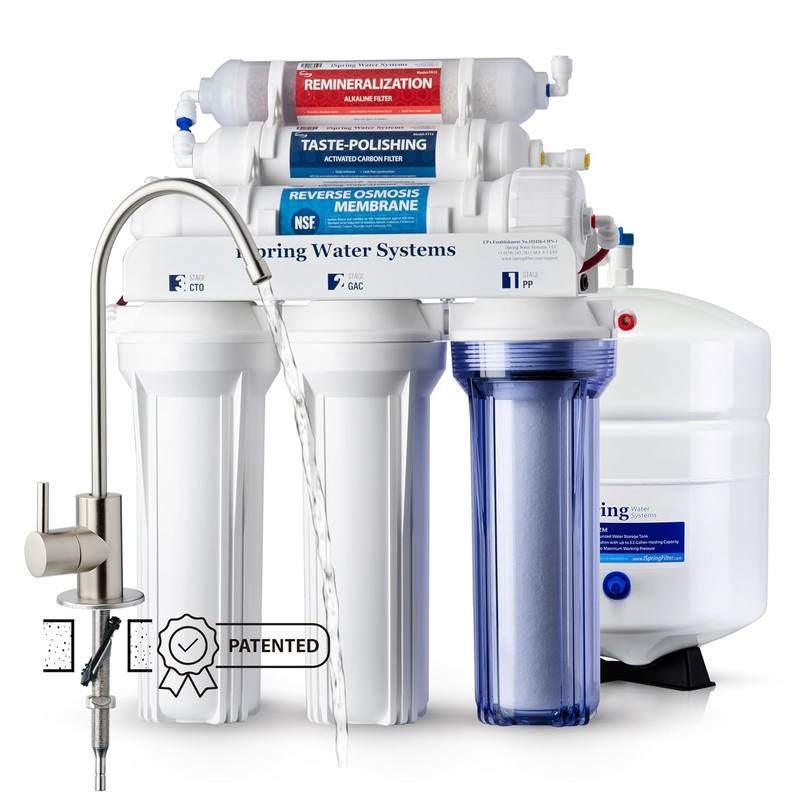
Under the sink
Reverse osmosis: the highest purity for drinking and cooking, with its own faucet under the counter.
See under-sink →Countertop
On the counter, no renovation: gravity-fed or connected to the faucet. The favorites of renters.
See countertop →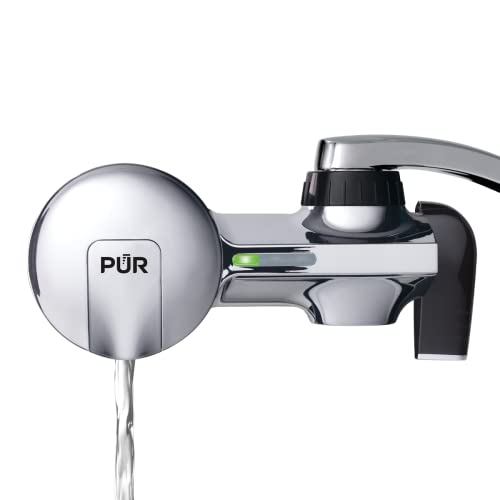
Faucet
They screw onto the faucet outlet and filter instantly. The most basic, cheapest option for chlorine.
See faucet →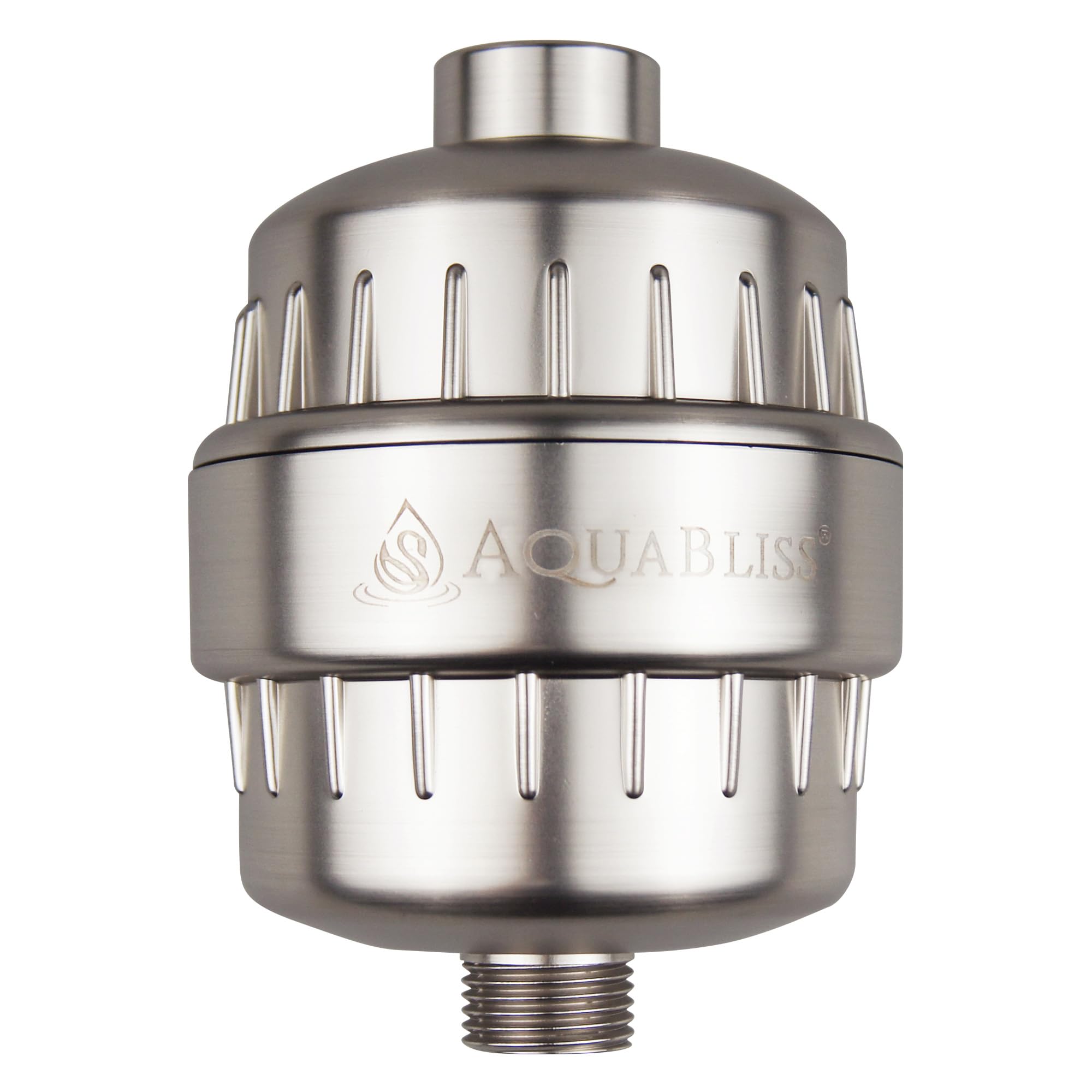
Shower
Less chlorine in your shower water: a cartridge between the arm and your showerhead, for skin and hair.
See shower →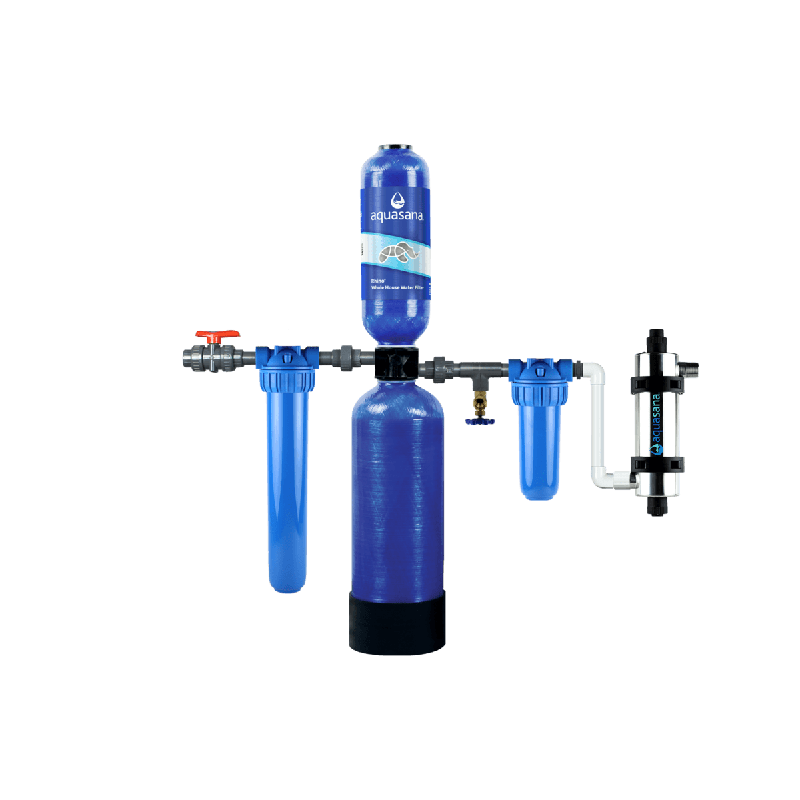
Whole house
Whole-house: it filters the water coming into the entire home and protects pipes and appliances.
See whole house →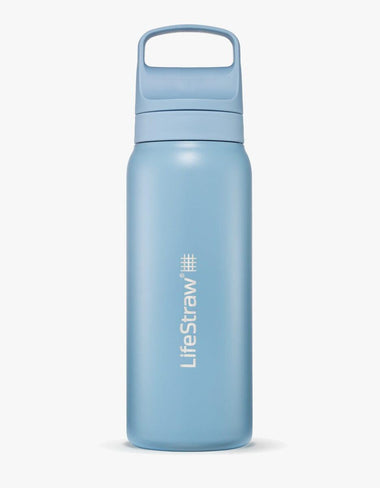
Filter bottle
Filtered water to take to work, to the gym or traveling, with no single-use bottles.
See filter bottles →The best sellers
These are the models that sell the most and are rated best by users. Our top recommendation if you don't want any installation: the iSpring CKC1C, which connects to your faucet in minutes.
iSpring CKC1C
Countertop filter · Connects to the faucet · No installation
For: drinking and cooking — filtered water instantly, no plumber.
- Reduces 95% of chlorine; NSF/ANSI standard
- No drilling or permanent installation: ideal if you rent
- A 6 to 12 month cartridge; transparent housing
~$35-40 on Amazon
Buy productiSpring RCC7AK
Under-sink reverse osmosis · 6 stages
For: the water you drink and cook with, straight from the faucet.
- More than 20,000 verified reviews
- Alkaline filter that adds minerals back and improves taste
- The best value-for-money option for drinking
~$200 on Amazon
Buy productZeroWater ZP-010
Filter pitcher · 10 cups · TDS at 0
For: drinking — fill it up and keep it in the fridge.
- The pitcher that filters the most: TDS at 0, IAPMO-certified for lead
- Fits in the refrigerator, ideal to start with
- TDS meter included to know when to change the filter
~$40 on Amazon
Buy product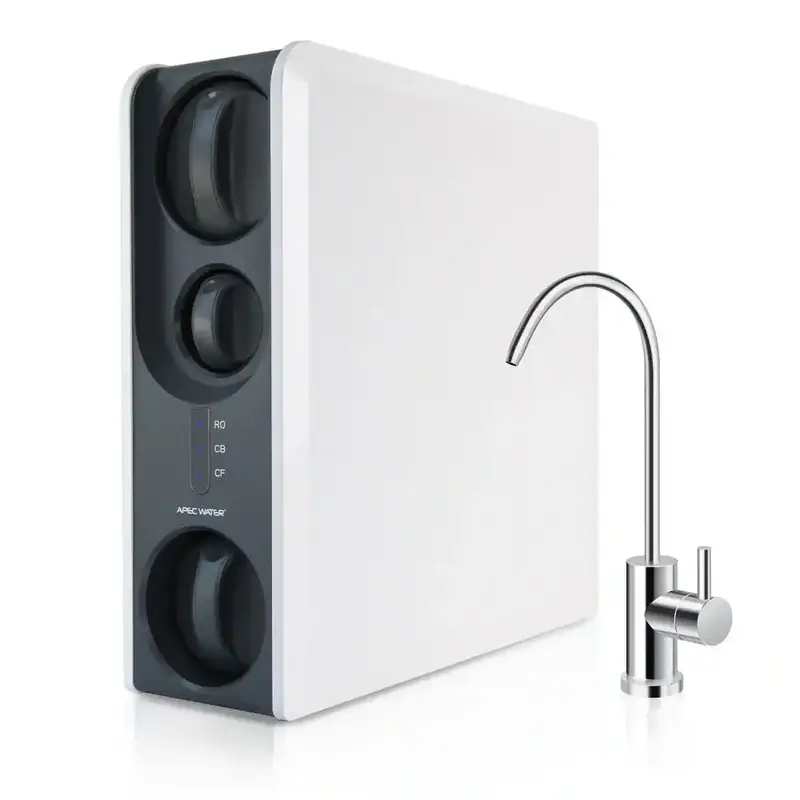
APEC ROTL-600
Tankless reverse osmosis · Under sink
For: the water you drink and cook with, with no tank taking up space.
- No tank: more compact and wastes less water
- Built-in filter replacement alert
- For those who want the best under the sink
~$600 on Amazon
Buy productAquaBliss SF100
Shower filter · Reduces chlorine and chemicals
For: showering with cleaner water for skin and hair.
- Filters your shower water: better for skin and hair
- More than 58,000 reviews; installs in minutes, no plumber
- Compatible with almost all showerheads
~$35 on Amazon
Buy productAquasana Rhino
Whole-house system · Filters every faucet
For: all the water coming into the house: showers, laundry and every faucet.
- Filtered water in showers, laundry and every faucet
- Protects pipes and appliances from scale and chlorine
- The complete solution for the whole home
~$936 on Amazon
Buy productThe 3 types of water filtration systems that are actually worth it
Reverse osmosis
It installs under the sink and produces high-purity water for drinking and cooking. It's the most popular option in kitchens.
See the full guide →Whole-house
It filters all the water coming into your home: showers, laundry and every faucet. It protects pipes and appliances.
See the full guide →Countertop filters
No installation: they sit on the counter and filter by gravity. Ideal for rentals or as a first filter.
See the comparison →Our honest reviews
In-depth analysis of a single product: what it does well, what it doesn't, and whether it's really worth buying. No marketing in disguise.
iSpring RCC7AK
Under-sink reverse osmosis · 6 stages · ~$200
More than 20,000 verified reviews: the best value for money for the water you drink.
APEC ROTL-600
Tankless reverse osmosis · Direct flow · ~$600
The most modern thing under the sink: no tank, efficient and with smart alerts.
Aquasana Rhino
Whole-house system · Filters every faucet · ~$936
Filtered water in showers, laundry and every faucet: the complete solution for the home.
Find out what's in your water
U.S. municipal water arrives treated and regulated, but what comes out of your faucet also depends on your city, the distribution network and your home's pipes. These are the names that come up most when a test finds something — and the filter that works against each one:
Lead
You can't see it, taste it or smell it: it usually comes from old pipes and solder, not from the treatment plant. Against lead, what counts is verified certification, not marketing.
How to filter lead →Chlorine
The city adds it to disinfect, and it's responsible for the "pool" taste and smell of tap water and for dry skin in the shower. Activated carbon is its natural enemy.
Which filter reduces it →PFAS
The "forever chemicals" (such as PFOA and PFOS) are showing up in more and more municipal tests. Look for systems with PFAS reductions tested under NSF/ANSI standards.
Certifications that matter →Microplastics
A Columbia and Rutgers study confirmed hundreds of thousands of particles per liter in bottled water. Filtering at home is also an answer to this.
What the science says →Metals and hardness
Excess calcium and magnesium leave scale on everything; iron stains and gives a metallic taste. Hardness isn't "filtered" with carbon: it's treated with a softener or reduced with osmosis.
Hard water and scale →Well water
If your home is fed by a well, nobody tests your water for you: sediments, iron, sulfur and bacteria depend on your land. Test first, filter second.
Well water guide →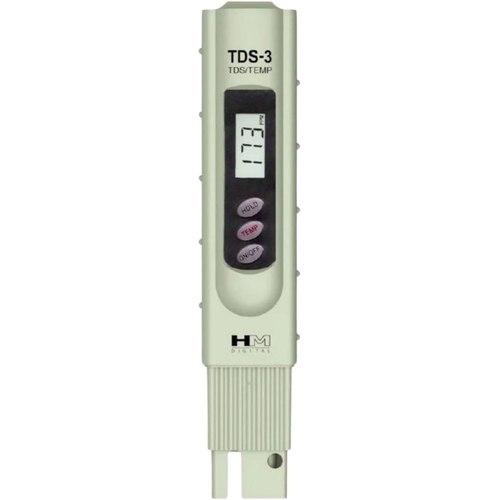
Measure it yourself, at home
There's a more direct way to start: a TDS meter. It fits in a pocket, takes seconds to use and gives you a first real number —how many dissolved solids your tap water carries— before you spend anything on a filter. It doesn't measure everything, and its page explains honestly what it does and doesn't; but as a first step to testing your water at home, it's the simplest one there is.
See the TDS meters →Where do I start choosing my water filter?
Most families only need to answer two questions: is the problem the taste of the water you drink, or do you want to protect the whole house? If it's the first, an under-sink reverse osmosis system solves 90% of cases. If it's the second, a whole-house system is the right investment.
Recent articles about water filtration
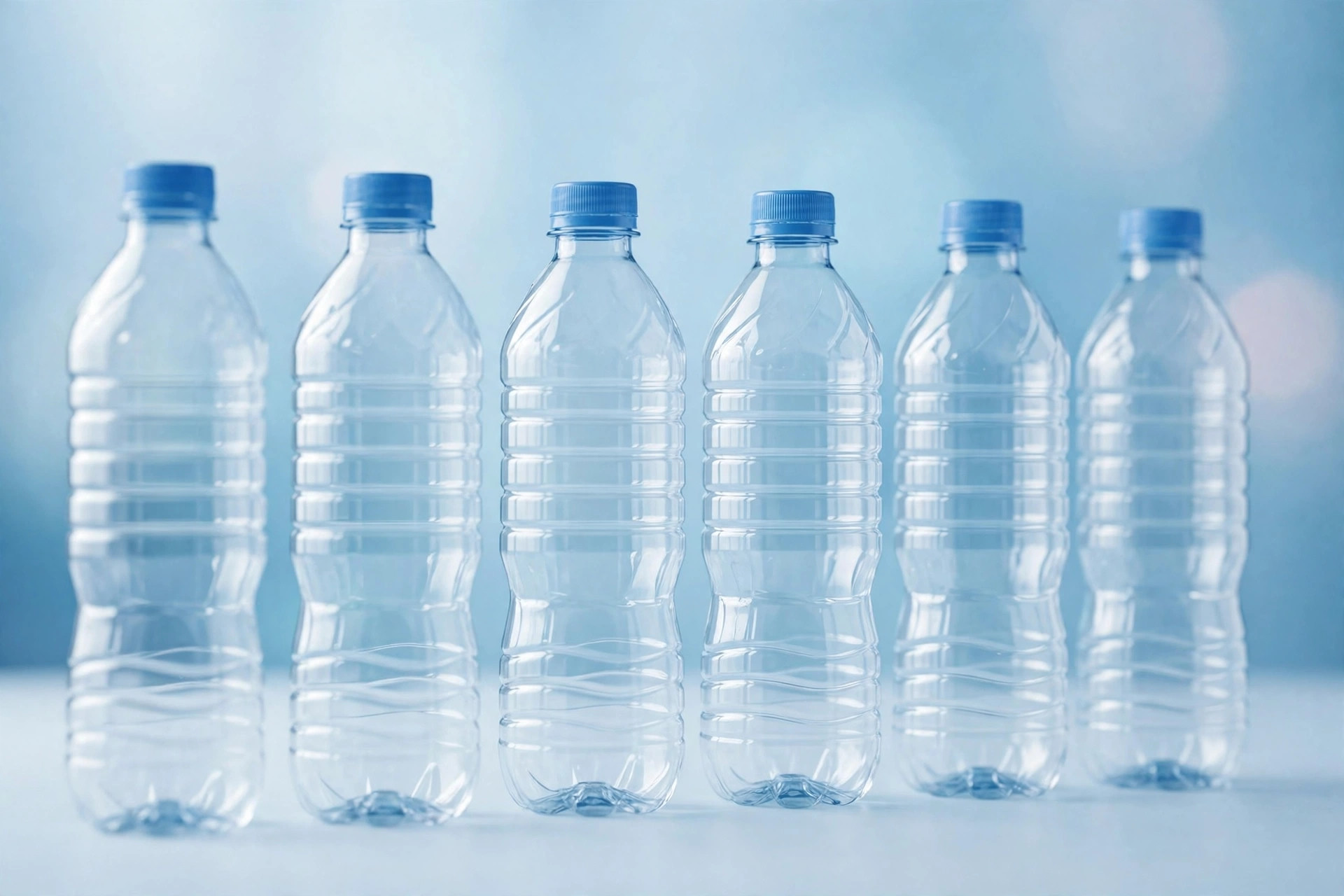
Your bottled water has 240,000 plastic particles per liter (science confirmed it)
A Columbia and Rutgers study revealed hundreds of thousands of invisible plastic particles per liter of bottled water. The verified data and what your options are.
Read article →Frequently asked questions about water filters
What filter do I need for my water?
It depends on the problem you want to solve. If it's the chlorine taste in the water you drink, a carbon filter (pitcher, countertop or faucet) is enough in most cases. If you want the highest possible reduction for drinking and cooking, under-sink reverse osmosis is the right level. If the problem is the whole house —showers, laundry, pipes— you need a whole-house system. And if your water comes from a well, it has to be tested first: our well water article explains the right order.
How often do you change a filter replacement?
Most prefilters are changed every 6 to 12 months and reverse osmosis membranes every 2 to 3 years, depending on use and water quality. Small cartridges last less: pitcher cartridges can run out in weeks if the water is hard, shower cartridges last about 4-6 months, and refrigerator cartridges are changed every 6 months. Each type page on this site gives the figure for the specific system.
Reverse osmosis or pitcher: which one is right for me?
A pitcher requires no installation, costs little to start, and works if your consumption is moderate, but it filters a little at a time and its replacements are the real expense. Reverse osmosis needs installation under the sink and costs more up front, but it gives you purified water instantly and in quantity, and per gallon it works out cheaper over time. If you drink and cook with filtered water every day, reverse osmosis pays off; if it's your first filter or you rent, start with a pitcher.
What does each type of filter remove?
Activated carbon reduces chlorine and improves taste and odor: it's the basis of pitchers, countertop filters, faucets and showers. Reverse osmosis also reduces dissolved solids, salts and metals such as lead. An ion-exchange pitcher like the ZeroWater brings dissolved solids down to 0. A whole-house system works at the entry point: sediments and, depending on its stages, chlorine throughout the house. No home filter removes absolutely everything: that's why it matters to know what is in your water.
Does a water filter work for well water?
Yes, and in fact whole-house is one of the most used systems with wells, because that water often carries sediments, iron and sometimes a sulfur smell. But with a well, nobody tests your water for you: the recommendation is to test it every year and choose the system based on the result, adding UV light if there are bacteria. The order matters more than the equipment: test first, filter second.
Do I need a plumber to install it?
Countertop, pitcher, faucet, shower and refrigerator filters don't require a plumber. Many people install under-sink systems themselves with basic tools, although a plumber does it in an hour. Whole-house systems we do recommend installing with a professional, because the main water line has to be cut.