What is a faucet water filter?
It is a small cartridge that screws directly onto the kitchen faucet outlet, usually over the aerator. A lever or small dial lets you switch between filtered water (for drinking and cooking) and unfiltered water (for washing up). It is the cheapest and fastest connected system to install: no hoses, no tank, and nothing on the counter.
Who is it for (and who is it not for)?
- It is a good fit if: you want the minimum viable improvement —removing the chlorine taste— while spending as little as possible, you rent, or your kitchen has no space under the sink or on the counter.
- It is not a good fit if: your faucet has a pull-out sprayer or an irregular outlet (most do not fit), you want to reduce dissolved solids or demanding contaminants, or you dislike changing cartridges often.
Faucet water filters to buy
Transparency first: we have not reviewed any faucet-mount filter yet, so none of them carries the badge. These are the options from the well-known brands, with the manufacturer's data; at the end we leave you the countertop CKC1C, which we did review and which also connects to the faucet.
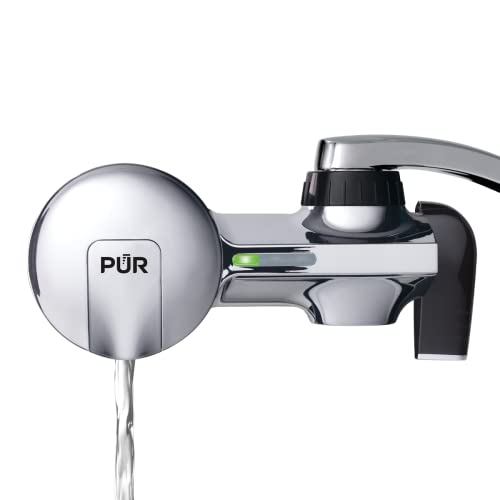
PUR PLUS PFM400H
Faucet-mount water filter · With indicator light
~$40 on Amazon
- ✓ NSF 42, 53 and 401 certified: reduces more than 70 substances, including lead
- ✓ 100-gallon filter (about 3 months), with a light that tells you when to change it
- ✓ Includes adapters; does not fit pull-out or sprayer faucets
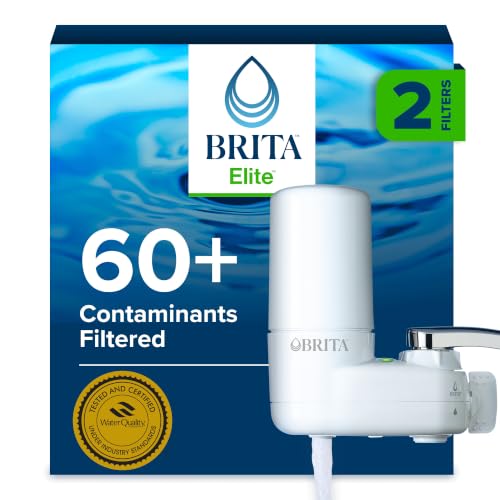
Brita FF-100 Complete
Faucet-mount water filter · Brita's basic model
~$32 on Amazon
- ✓ NSF 42 and 53 certified: lead, asbestos, benzene and cysts
- ✓ 100-gallon filter (about 4 months)
- ✓ Lever to switch between filtered and unfiltered water
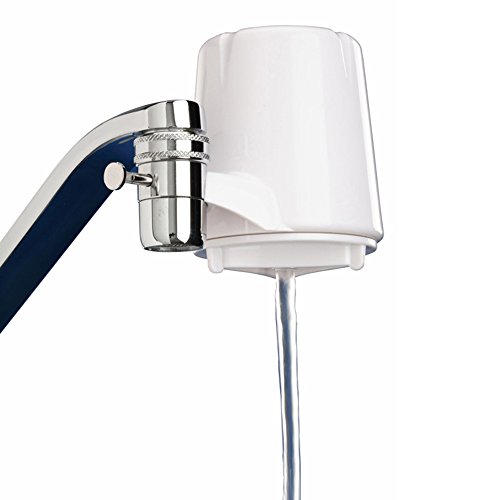
Culligan FM-15A
Faucet-mount water filter · Compact
~$28 on Amazon
- ✓ NSF 42 and 53 certified by IAPMO: lead, cysts, atrazine and lindane
- ✓ 200-gallon filter (about 2 months)
- ✓ Compact (6.25 inches): among those that get in the way least at the sink
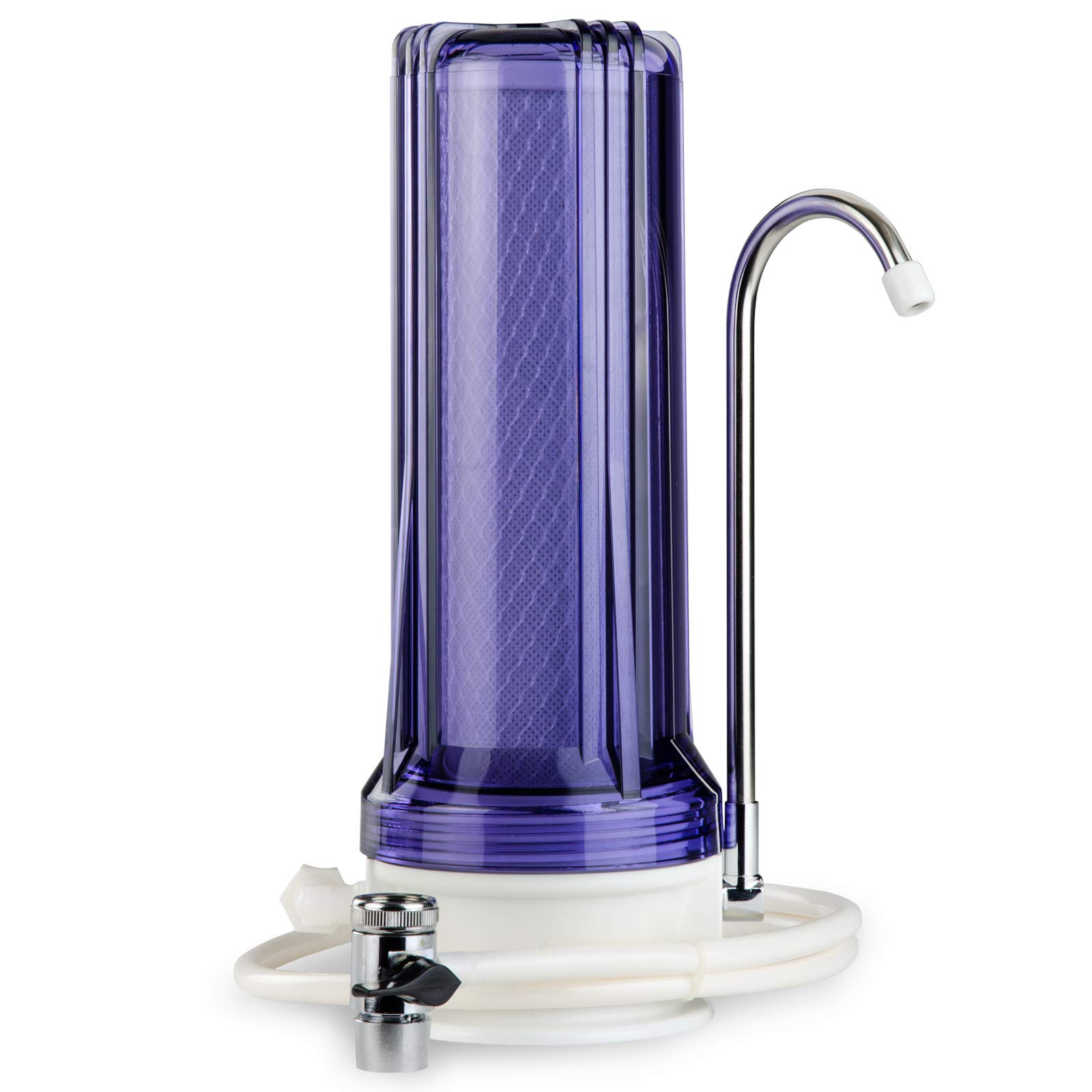
iSpring CKC1C
Countertop water filter, faucet-connected
~$35-40 on Amazon
- ✓ Connects to the faucet in minutes: no drilling, no plumber, no work
- ✓ Reduces 95% of chlorine with activated carbon under NSF/ANSI standards
- ✓ 6- to 12-month cartridge; ideal if you rent
It is not a faucet-mount model: it is a countertop filter that connects to the faucet — the only one of its type we have reviewed.
Faucet replacement filters: short-lived and frequent
- General guidance: most faucet filter manufacturers recommend changing the cartridge every 2 or 3 months (or by gallons filtered). It is cheap per unit, but it is the most frequent replacement of all the types: add up the full year before deciding it is “the cheapest.”
- The covered alternative: the iSpring CKC1C cartridge lasts 6 to 12 months according to the manufacturer, with a clear housing so you can see its condition.
- Sign it is time: on faucet models, when the flow while filtering slows to a trickle, the cartridge is spent even if the time is not up yet.
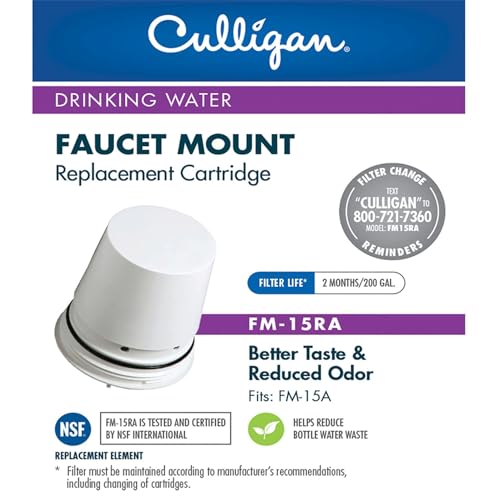
Culligan FM-15RA cartridge
Genuine replacement · For Culligan FM-15A
~$15 on Amazon
- ✓ Level 3 filtration: reduces lead, chlorine, atrazine and lindane
- ✓ 200 gallons or 2 months per cartridge
- ✓ Tool-free change
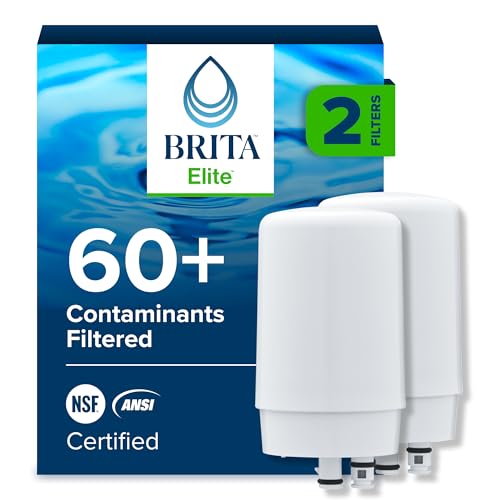
Brita On Tap filters (2-pack)
Genuine FF-100 replacement · For Brita faucet systems
~$25 on Amazon
- ✓ 100 gallons per filter: up to 4 months of use
- ✓ Reduces chlorine, taste and odors
- ✓ Standard faucets only: not for pull-out or spray styles
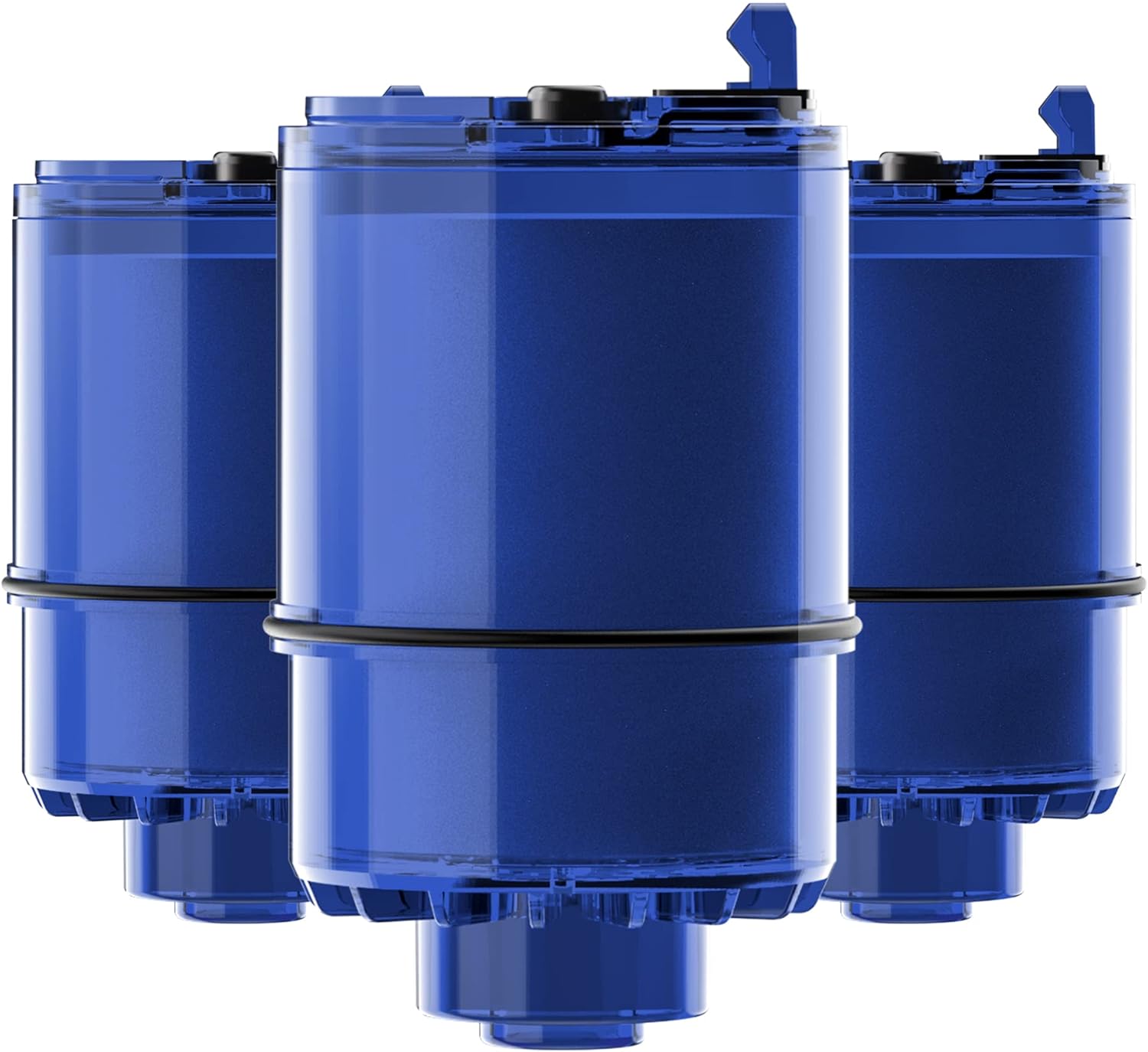
Waterdrop WD-C08A filters (3-pack)
Compatible with PUR RF-9999 · NSF certified
~$30 on Amazon
- ✓ Replacement for PUR and PUR Plus faucet systems
- ✓ 3-in-1 filtration with lead reduction
- ✓ Three cartridges: about 9 months of typical use
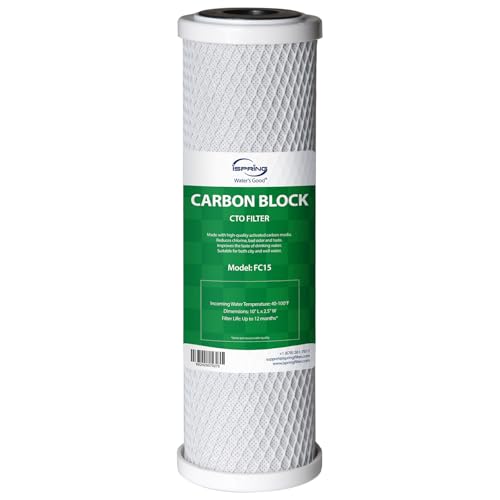
iSpring FC15 cartridge
The CKC1C replacement · The 6-12 month alternative
~$18 on Amazon
- ✓ 5-micron coconut shell carbon block
- ✓ Reduces chlorine, taste and odor; tested to NSF/ANSI 42
- ✓ Change every 6 to 12 months depending on your water
Keep exploring
- Countertop water filters — the CKC1C's category and the premium option in this format.
- Honest review of the iSpring CKC1C — the good, the not-so-good and its cost per year.
- All filters by type of use — pitcher, refrigerator, shower, whole house and more.
- How to choose based on your water — before you buy any system.
Frequently asked questions about faucet water filters
How often do you change a faucet filter cartridge?
As a general guide, most faucet filter manufacturers recommend changing the cartridge every 2 or 3 months, or after the number of gallons stated on the box. It is the shortest-lived cartridge among fixed systems: cheap per unit, but frequent. Keep that in mind when you compare the annual cost with a countertop filter, whose cartridge can last 6 to 12 months.
Does a faucet filter work in any kitchen?
Not in all of them. It needs a standard faucet with a threaded aerator: faucets with a pull-out sprayer, designer faucets with an irregular outlet and some decorative single-handle faucets cannot take the fitting. Check your faucet's outlet before you buy; if it is not compatible, a countertop filter connected with a diverter valve usually faces the same limit, and a pitcher becomes the no-installation option.
What does a faucet filter actually reduce?
Its strong point is chlorine: it improves the taste and odor of the water you drink and cook with. It is the most basic filtration among connected systems, so do not expect a reduction in dissolved solids or the level of a reverse osmosis system. For specific contaminants, require the model to state the reduction with certification, as we ask in our article on lead.
Faucet filter or countertop filter?
A faucet filter is cheaper to start with and takes up no counter space, but its cartridge lasts less time and the flow drops while filtering. A faucet-connected countertop filter, like the iSpring CKC1C we reviewed, costs about the same upfront, filters with a 6- to 12-month cartridge and keeps the flow better. If you will use it daily, the countertop filter usually wins on cost per year.
Recent articles on water filtration
Your bottled water has 240,000 plastic particles per liter (science confirmed it)
A Columbia and Rutgers study revealed hundreds of thousands of invisible plastic particles per liter of bottled water. The verified data and the options you have.
Read article →